
Hervé
-
Posts
10098 -
Joined
-
Last visited
-
Days Won
569
Content Type
Profiles
Articles, News and Tips
Forums
Everything posted by Hervé
-
All off-topic posts deleted. Guys, I remind that this topic is about HDMI audio... Looking at the zipped EFI provided above, I can se that the OC config lacks the required, yet well-known, properties injection for HDMI audio: that of the HDMI connector type for the relevant iGPU connector/port (usually con1). framebuffer-con1-enable 1 NUMBER framebuffer-con1-type 00080000 DATA If audio is working from the onset, the above will enable HDMI audio. Of course, the exact connector used by HDMI output needs to be verified and adjusted as required (con2, con3). See the Whatevergreen user manual for details.
-

NUC6i3SYK: How can I enable the front USB ports (Big Sur)
Hervé replied to lamatta17's topic in The Archive
HDMI audio can only work if you inject the HDMI type to the relevant connector (usually con1): framebuffer-con1-enable 1 NUMBER framebuffer-con1-type 00080000 DATA -
This thread is a replacement of @Baio77's recent thread which made insufficient credits to the author and grabbed screenshots or copied/pasted stuff from other people's without authorisation or credits. It's not the way things are done here... Great to read that development work continued based on the well-known work made by Alexandred on his VoodooI2C driver. Developer @juico forked the work of other developer @blankmac, both publishing a driver for the following Alps trackpads: T4 USB (as fitted to HP Elite X2 1012 G1 or G2 laptops) I2C T4 (as fitted to HP ZBook 15 G3) I2C U1 (as fitted to Dell Latitude 7x80 or 5x80 and some Precision) At time of writing (Oct 2021), the drivers remain at an early stage of development and experimental for some Alps devices. All details and released drivers are available at the devs respective GitHub repositories: https://github.com/blankmac/AlpsHID https://github.com/blankmac/AlpsHID/releases/tag/v1.0 https://github.com/juico/AlpsT4USB https://github.com/juico/AlpsT4USB/releases Hopefully both devs can unite and come up with a single unified driver... The drivers appear functional and capable of supporting multiple gestures as stated by @Lorys89 on his GitHub-based Latitude 7280 guide: https://github.com/Lorys89/DELL_LATITUDE_7280 Edit - 13 Oct 2021: Juico pinged me to inform me that his fork is now deprecated and all work is now undertaken under Blankmac's repo. All details and binaries available at the following URLs: https://github.com/blankmac/AlpsHID https://github.com/blankmac/AlpsHID/releases
-
You may follow the documented process for Haswell desktop computers: https://dortania.github.io/OpenCore-Install-Guide/config.plist/haswell.html
-
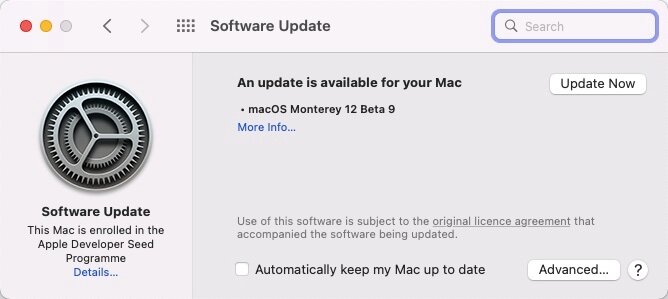
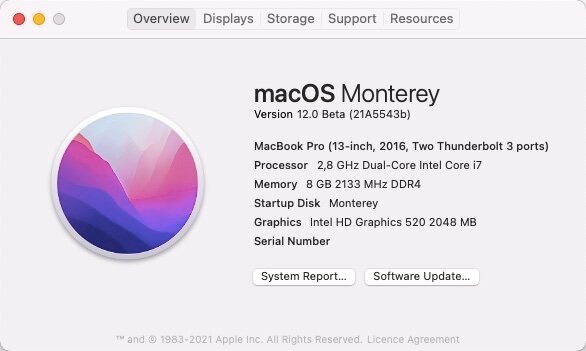
9th beta released October 6th, 2021. Build 21A5543b. As per beta7 and beta8, I had to temporarily use SMBIOS iMac17,1 to complete the upgrade and avoid the boot loop problem since I'm using older bootloader versions (Clover r5133 and OC 0.7.0). Other than that, all Ok on my Latitude E7270 (Clover) and Toshiba Satellite R50-B (OC).

-
Running macOS on standard PCs was never meant to be. And many may indeed consider that Apple operate a "blackbox"; it certainly is opaque in many aspects. Your trouble here is that you're using hardware from a tiny outfit and you cannot expect this to be as reliable and well built as mainstream manufacturer's equipment.
-
Yes, well it's *almost* a ThinkPad!
-
Signature is now visible but it was not before. On checking things out on the Net, I now understand why I could not find any specs or info about a ThinkPad X210... That simply does not exist! The computer in question here is not a real Lenovo ThinkPad at all but something made & sold by a Chinese group of enthusiats that goes by the name of 51NB and who re-use ThinkPad shells to fit their own motherboards or provide motherboards to fit into Thinkpad shells. Coreboot firmware in place of a standard/stock BIOS... why not? https://geoff.greer.fm/2019/03/04/thinkpad-x210/ I'm not saying the machine is bad but this belongs more to the DIY classification than anything else. Bearing this in mind + the fact the BIOS current firmware fitted to the motherboard is not what we would call usual standard, I would not expect too much in terms of chances to fully or properly run macOS on this platform. Too many unknowns (but one must love the unusual 2880x1920 LCD panel) and, as you experienced yourself, the usual Hackintosh settings just don't work. PS: I took the liberty of modifying your signature + thread title because we don't want to mislead anyone with this... "ThinkPad".
-
SSDTs are more flexible and to the point. DSDT patching is now kinda deprecated and seldomly used.
-
I’m having difficulties finding the specs of this ThinkPad X210 model. By now, the old member that you are should know that providing one's platform specs is the 1st requirement to obtain support and assistance. So please do so before anything else. This being said, given that you all you mentioned was UHD 620, we can only guess that your X210 is either: 8th gen Kaby Lake R 8th gen Whiskey Lake 10th gen Comet Lake The iGPU properties that require to be injected differ according to your system’s CPU family. Given that you appear to fake the id of a Kaby Lake R iGPU (0x5916), I suspect your X210 is of that particular generation. For such Kaby Lake R platform, the following properties usually are required: KBL framebuffer layout 0x59160009 or 0x591B0000 fake iGPU id 0x5916 SMBIOS MBP15,2 I invite you to consult the WhateverGreen User Manual. You'll find that the KBL framebuffer layout id you specified in your config does not exist which would explain a few things, wouldn't you say? I also doubt you need the CpuTscSync kext.
-
New update as of June 2021. See our article here. The above is now deprecated. Much improved kext written by Firewolf (aka Austere.J) available here: https://github.com/0xFireWolf/RealtekCardReader/releases
-
You can start by identifying the make and model... And, if as expected, it's a certain Realtek card reader, we have posted articles and threads about it.
-
Hmm, I do... Anyway, you know what you have now.
-
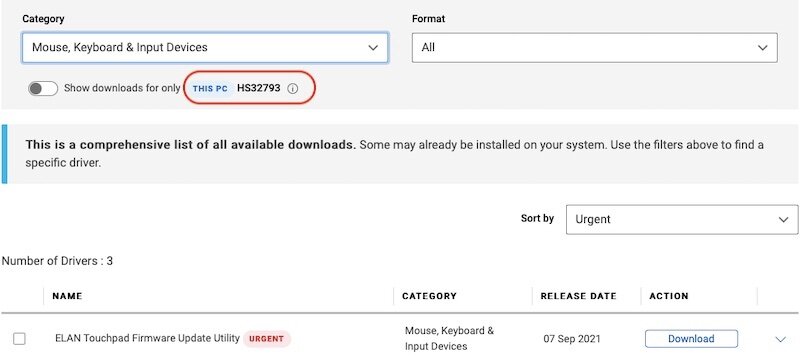
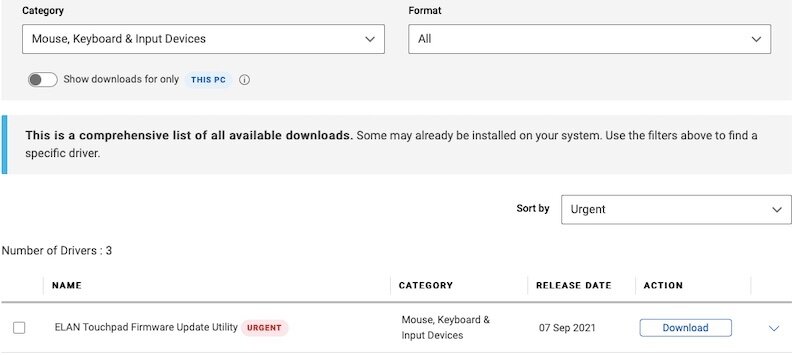
Erm... According to the Dell support web site, this XPS 15 9500 laptop is fitted with an ELAN touchpad: https://www.dell.com/support/home/en-us/product-support/product/xps-15-9500-laptop/drivers
-
When I asked about the model of NVME SSD, I meant make and model, not its physical form (and all NVME SSDs are of course M.2). So identify it, open the laptop and look at the label on the SSD if necessary.
-
What's the model of NVME SSD? Some are not supported.
-
What are the other specs? Wifi? Disk?
-
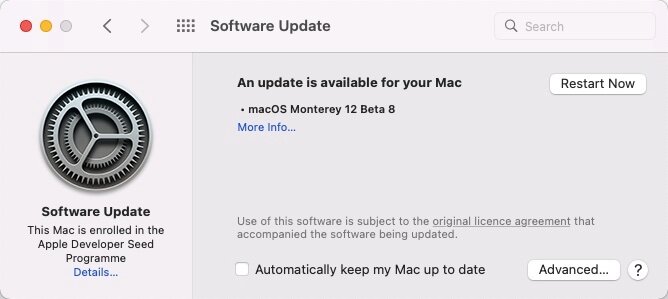
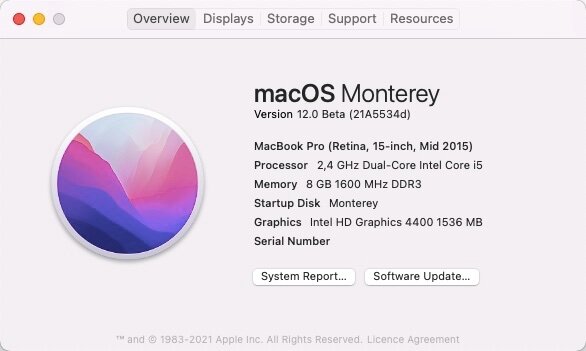
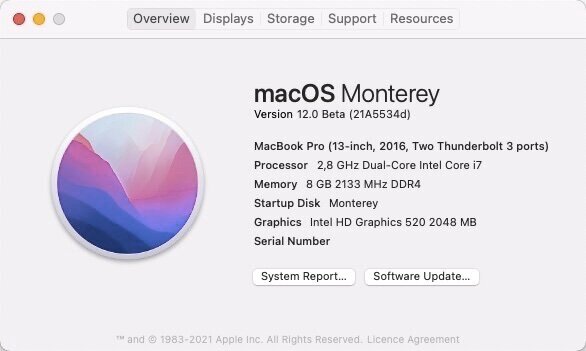
8th beta released September 28th, 2021. Build 21A5534d. As per beta7, I had to temporarily use SMBIOS iMac17,1 to complete the upgrade and avoid the boot loop problem. Other than that, all Ok on my Latitude E7270 (Clover r5133) and Toshiba Satellite R50-B (OC 0.7.0).
-
https://osxlatitude.com/forums/topic/16757-solved-opencore-gui-not-showing/?tab=comments#comment-111632
-
Dell Vostro 5568: DRM fix for Netflix + AppleTV under Catalina?
Hervé replied to talrhv's topic in The Archive
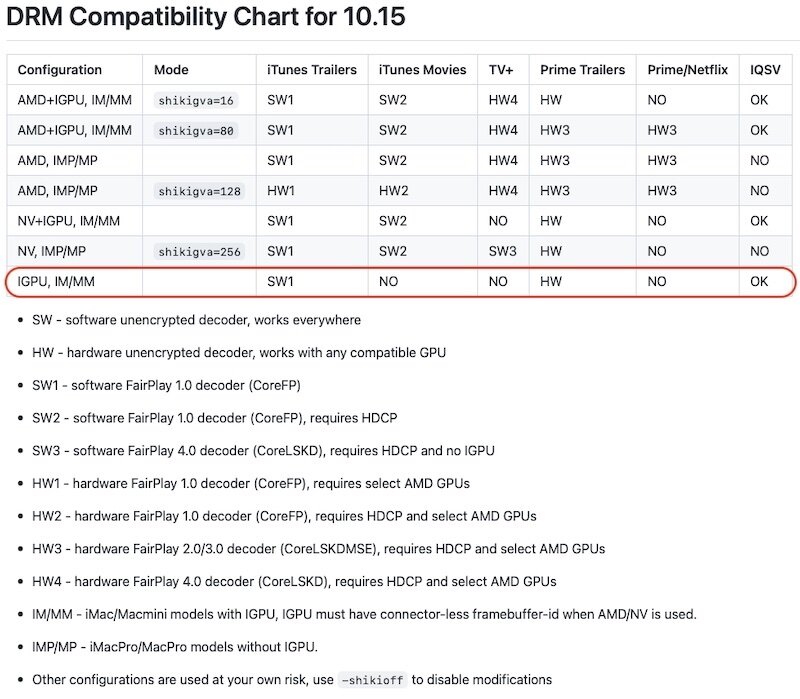
https://github.com/acidanthera/WhateverGreen/blob/master/Manual/FAQ.Chart.md
-
It depends entirely on the configuration parameters you're using. Monterey does not natively/officially support HD4000 graphics and Ivy Bridge platforms were dropped. As such, you have to adjust your config with a supported SMBIOS and you'll subsequently have to apply patching to obtain support for HD4000 graphics. Can't say more without more info from you at this stage.
-
Dell Vostro 5568: DRM fix for Netflix + AppleTV under Catalina?
Hervé replied to talrhv's topic in The Archive
No DRM fix for Netflix with Safari on Hackintosh laptops with Intel graphics, no. https://github.com/acidanthera/WhateverGreen/blob/master/Manual/FAQ.Shiki.en.md https://dortania.github.io/OpenCore-Post-Install/universal/drm.html On my Haswell or Skylake Hackintosh laptops, trying to view Netflix contents in Safari immediately results in a "Error code S7706" message. On my Ivy Bridge/HD4000 Latitude E6230 I can watch Netflix contents in Safari 14.1.2 under Catalina 10.15.7 (build 19H1417) or Safari 15.0 under Catalina 10.15.7 (build 19H1419) for just over 1 x minute before the screen goes green irrecoverably. This is something Shiki used to be able to fix but it has not been the case for years. Apple TV works ok for watching movies. Certainly works on all my Ivy Bridge/Haswell/Skylake Hackintosh laptops. TV+ or TV Shows won't though. -
OpenCore: problem after updating from v0.6.8 to v0.7.3
Hervé replied to dctacsi's topic in Bootloaders
Your screenshot shows that macOS is not even starting to load... You need to update your OC config so that it matches the v0.7.3 standards and requirements. That's the trouble with OpenCore, they change the way parameters and elements of the config must be defined and organised from one version to the other. Given that they release a new version every month, it can be a pain in the backside... There are threads at InsanelyMac that provide full recap of what's changed from version n to version n+1. I suggest you consult them all so that you suss out what you need to modify in your config. Do follow the monthly updates posted at Dortania too. https://www.insanelymac.com/forum/782-opencore-releases/ https://dortania.github.io -
Precision M6800: black screen on wake when running on battery
Hervé replied to draskostar's topic in Precision M Series
OS X/macOS is not based on Linux and what you report is not a general issue affecting all Dell laptops. Did you try optional boot-args such as igfxonln=1 ? In all likelihood, this black screen on wake problem may be solved with some ACPI battery patch. Impossible to say more without any debugging info... -
Post a zipped copy of your bootloader's EFI folder.