
Hervé
-
Posts
10098 -
Joined
-
Last visited
-
Days Won
569
Content Type
Profiles
Articles, News and Tips
Forums
Everything posted by Hervé
-

[Asus G73sw] How to get Realtek USB 2.0 cardreader working
Hervé replied to FCU4ever's topic in The Archive
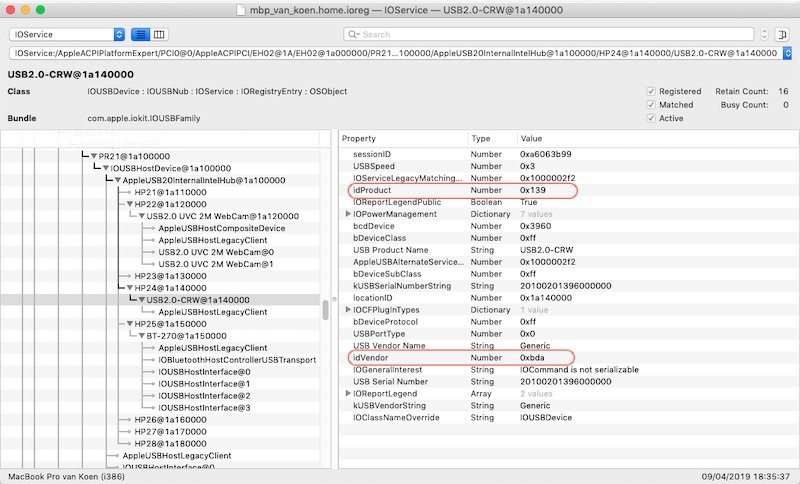
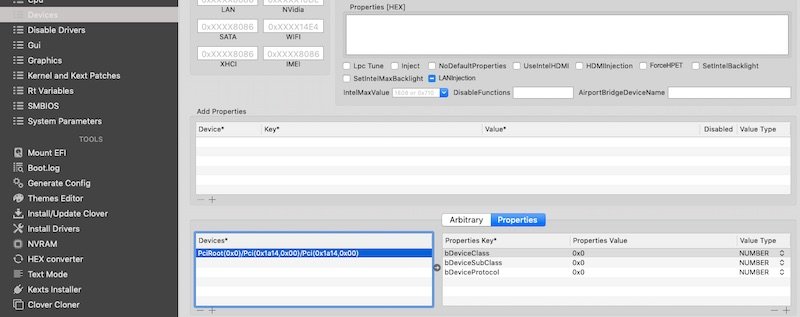
Is it the device shown in the IOReg output you posted here? Vendor id=0x0bda, i.e. Realtek USB Device id=0x0139, i.e. RTS5139 Card Reader Many people have tried to get this card reader working for many years without any success... You could try to add an entry in FakeSMC's Info.plist to inject a new device profile into AppleUSBCardReader kext (PlugIn of AppleStorageDrivers kext) as described here. Copy/paste an existing profile from the PlugIn that you'll then modify in order to specify the above Ven id and Dev id converted from hex to decimal. If, as I expect, the above mod. is unsuccessful, you may try and overwrite some of the fields of the USB descriptor shown in IOReg for your card reader, specifically the following ones: bDeviceClass bDeviceSubClass bDeviceProtocol and set them to 0; yous are all set to 255 (0xff). See here for detailed information on USB descriptors. This what my Vostro200 desktop shows for its USB-internal TEAC CA-200 card reader and I think that's what macOS uses to hook the device and load drivers: You would try to set those values through Clover's properties injection. Use Clover Configurator to that effect. You already know that the card reader is located @1a14,0. /!\ No guarantee any of this will work at all of course...
-
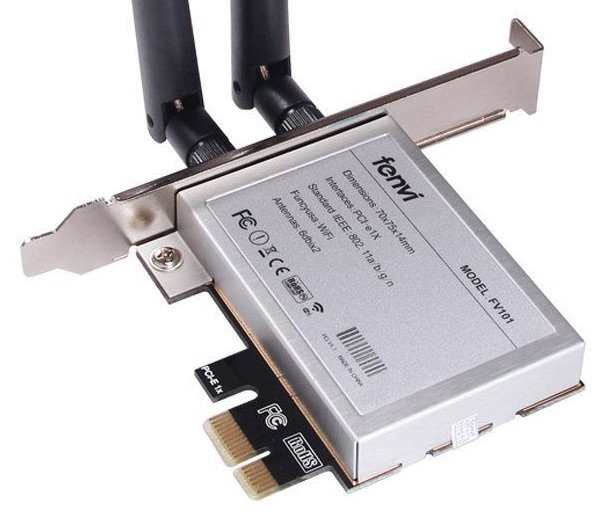
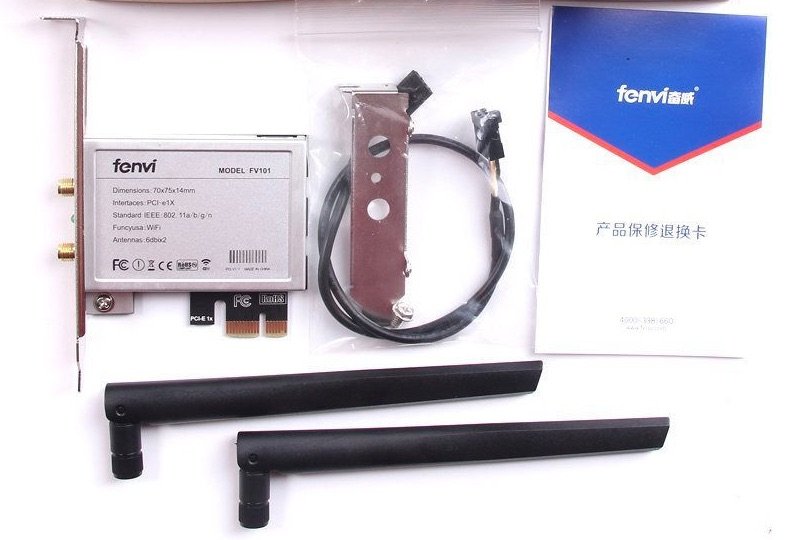
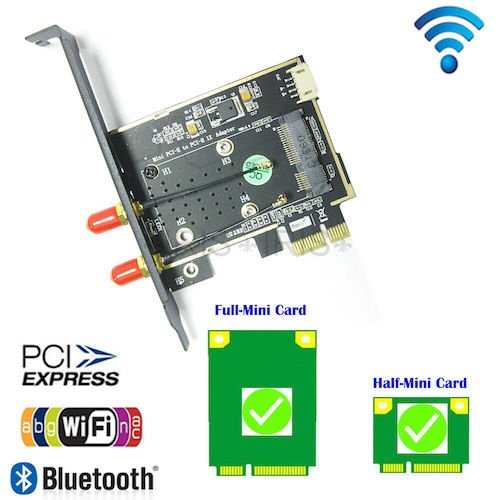
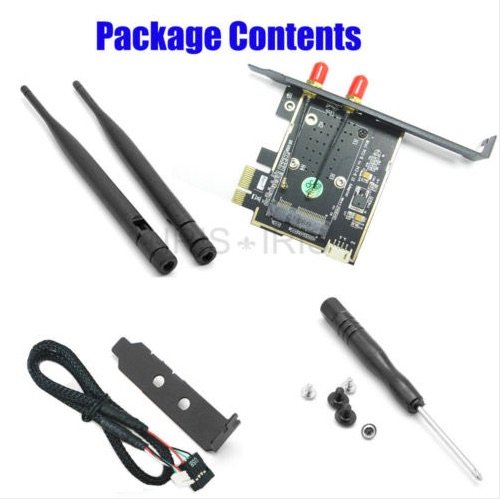
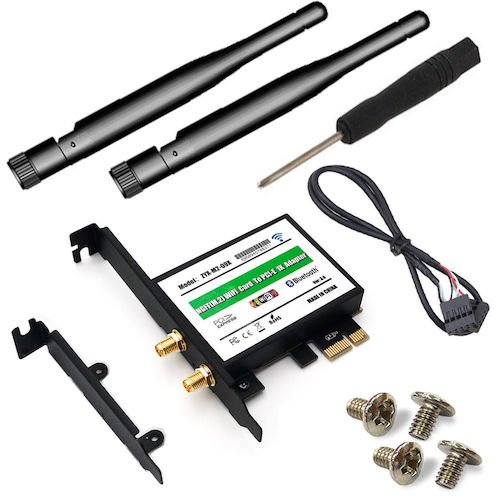
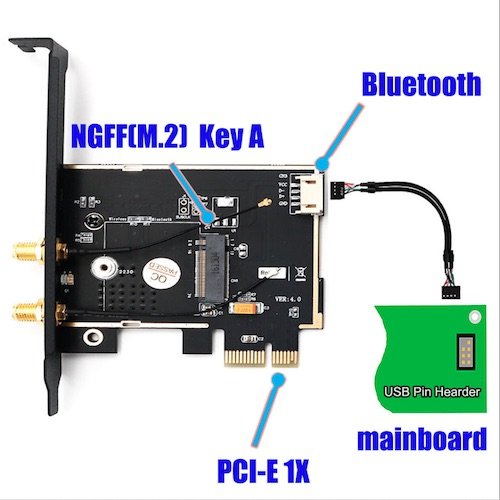
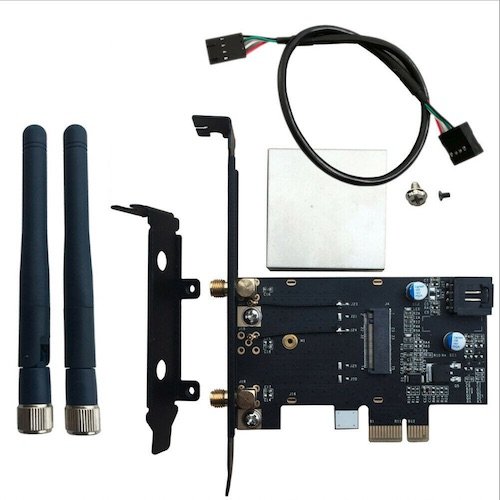
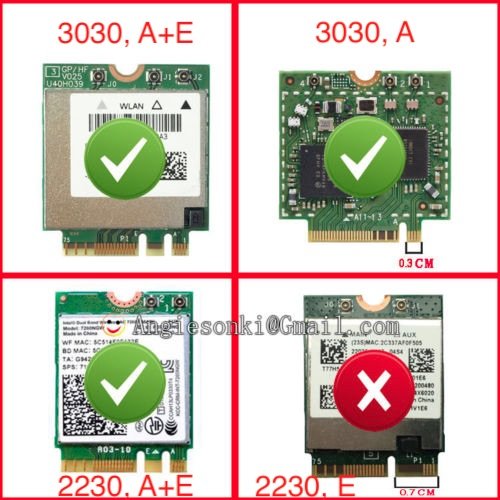
You'll find several such adapters that convert mini-PCIe or M.2 to PCIe x1, for instance if you type "mini-PCIe to PCIe wireless adapter" in a well-know auction site... If at all possible, opt for something that carries a degree of adaptability in terms of cards or antennas, like support for full or half size mini-PCIe cards. Also opt for an adapter that supports Bluetooth through USB connection and provides the necessary cable. I can recommend the following Fenvi adapters: Fenvi FV101 for half-size mini-PCIe to PCIe x1 + Bluetooth Fenvi FV102 for M.2 2230 to PCIe x1 + Bluetooth Both come with a high-profile and low-profile rear bracket and a USB cable. They're limited to the size of cards listed above and 2 x antennas (like most if not all other adapters). A cover comes to protect the wireless card and antenna connectors once in situ. I currently use a FV101 adapter in my SFF Dell Vostro 200 in which I fitted a DW1520 card. There are other (unbranded?) adapters that provide very similar features but support full-size and 1/2-size mini-PCIe card. Eg: For M.2 adapters, pay special attention to the Key, knowing that wireless cards usually are Key A+E (slot with Key A supports cards with Key A+E, not cards with Key E since these are missing the A notch). M.2 wireless cards usually are 2230, only a few are 3030 (wider), so no worries on that front (all should fit). Just note that 2230 cards usually have 2 x antenna connectors whilst 3030 cards usually have 3.
-
[SOLVED] Dell Latitude E7440 Mojave installation.
Hervé replied to MatrixHack's topic in The Archive
Which version of Clover are you using. Try with the latest r4919. https://github.com/Dids/clover-builder/releases -
Afaik, nothing you can do apart from developping the code for ALPS V7... Try and contact DrHurt directly maybe. He visits this forum and InsanelyMac's too.
-
AfaiK, the kext never handled those late ALPS Touchpad versions very well. It's been stated by Dr Hurt himself in previous pages. Last compiled version (by Bronxteck, available on p1) supports TouchPad & TrackPoint for the V3 ALPS hardware fitted to my Latitude E6440: V3 Rushmore Touchpad with ID: E7=0x73 0x03 0x0a, EC=0x88 0x08 0x22
-
[SOLVED] Dell Latitude E7440 Mojave installation.
Hervé replied to MatrixHack's topic in The Archive
You can proceed with 10.14.4. -
I had no issue with my E6220 when it ran on 4GB RAM. I upgraded it to 8GB to minimise the graphics glitches. But certainly no freeze.
-
You've not specified what you did in terms of changes/patches so we cannot guess... This being said, I notice that you've modified the _INI method of that SSDT table from: Method (_INI, 0, NotSerialized) // _INI: Initialize { Store (Zero, \_SB.PCI0.RP05.PEGP._ADR) NBAK () } to: Method (_INI, 0, NotSerialized) // _INI: Initialize { Store (Zero, \_SB.PCI0.RP05.PEGP._ADR) _OFF () } Assuming you've not modified anything else, try this instead: Method (_INI, 0, NotSerialized) // _INI: Initialize { Store (Zero, \_SB.PCI0.RP05.PEGP._ADR) NBAK () _OFF () } It would also help if you would post your entire set of raw tables saved in ACPI/origin folder. A copy of your saved IOReg from IORegistryExplorer would be very useful too.
-
Sound and Battery problem in Thinkpad X1 Carbon 3rd Gen[Mojave]
Hervé replied to marshall's topic in The Archive
Mojave patcher tool is for unsupported platforms. The X1 Carbon 3rd gen meets all the technical requirements for Mojave, so, afaik, no need for the patcher. -
No, not all E6230 are fitted with the same card.... As written on the labels; it's a Dell DW1540, based on Broadcom BCM43228. It's listed in our inventory (link provided above) and you're out of luck, sorry.
-
Sigh... This "original wifi/bluetooth combo card", what is it ? Make and model? Intel cards not supported. If you have one, it will need to be replaced. Consult our inventory.
-
Is your installation full vanilla or a distro? Post a zipped copy of your Clover EFI folder.
-
I don't know what more you expect... I ask you something, you reply something unrelated... All in all, it seems you do not have any mini-PCIe wireless card but are running on the built-in DW380 BT 4.0 module and a TP-Link TL-WN821N v5 USB dongle for wifi. Nothing further to add, I guess your done.
-
New Latitude 7490 now available in Guides section: Only the Realtek RTS525A microSD card reader and the buttons of the Alps Touchpad aren't working. External mouse recommended...
-
AR5BXB63 carries PCI id 168c:001c. This is an old card that is only supported up to Lion 10.7.5, not in any subsequent OS X/macOS versions as stated here: It would be most helpful if you could say what card you have in your E6230 at the moment. Is there a problem giving out this info???
-
Framebuffer patching is mandatory for gaining those desired VGA/DP/DVI output. From memory HDMI output should work OOB but patching still is required to gain HDMI audio output.
-
As specified here, Bluetooth module carrying PCI id 413c:8197 is Dell's built-in BT 4.0 DW380. That's supported under OS X/macOS but limited to very basic usage (no AirDrop, no Handoff). You must untick Bluetooth in BIOS->Wireless to disable that module and hope to use the BT module of any Wireless/BT combo card fitted in one of the mini-PCIe slot. Failing that, the built-in module takes precedence over the combo card. I've experienced this. You need to post the make and model of your Wireless (or combo Wireless/BT) card and/or its PCI id.
-
Lenovo 00JT494 is indeed the same as the DW1820A: https://wikidevi.com/wiki/Foxconn_T77H649.00 Do not go for those Qualcomm Atheros-based devices you mentioned above, they're poorly supported under macOS. Stick to Broadcom-based cards.
-
Arf! No, I don't own any E7250 and I guess you didn't check the adapter/card size before buying! But what's that other slot, next to the M.2 WLAN one? It seems larger. If you have to look for another card and still exclude the DW1830, I very recently (yesterday) got my M.2 2230 DW1820A card fully working under High Sierra/Mojave. That will definitely fit into your slot and may be a more suitable alternative... It sells from $10€ to $20.
-
By NFC sticker, do you mean the NFC/RFID logo that is engraved on the laptop's casing when it is fitted with an optional finger scanner and Contactless SmartCard Reader? That would indeed be the Broadcom BCM5880 chip but that's not supported under OS X/macOS. You can read more about that chip here: https://ridrix.wordpress.com/2009/06/30/dell-embedded-contactless-smartcard-reader/ Those chips and associated security devices are normally directly supported by applications, not through OS drivers. For example, this was the case for the finger scanners of fitted to old Latitude D4x0 or other models of that generation. There were Mac applications that could use those to provide authentication under Snow Leopard, Lion or Mountain Lion. Subsequent chips/scanners/readers were dropped and I'm not sure the apps were updated over time. If, by NFC sticker, you meant an actual NFC tag, I don't think that can unlock your computer, no. Unless you have a NFC reader of some sort installed in the laptop that can read/scan that tag and decode it. But it would not make any sense... By definition, an NFC sticker/tag's purpose is to be approached by an NFC-enabled device in order to trigger an action/execute a task on that device through a specifically NFC-tuned application. Most common NFC-enabled devices would be SmartPhones... Or does your 7480 actually have an NFC radio/reader that, when presented with an NFC tag or an NFC card could then automatically enter the password that will unlock it? This would require an NFC-tuned app on the PC too. But as far as I know, it's just another Contactless Smart Card Reader that Delll handle through their ControlVault2 security driver/package. https://lifehacker.com/use-nfc-tags-to-unlock-your-computer-1561695242 The two (NFC tag and NFC reader) are not the same at all... If your 7480 is NFC-enabled, it'll carry a logo on the case (not a sticker/tag): https://www.dell.com/support/article/fr/fr/frbsdt1/sln292603/how-do-i-use-near-field-communication-nfc-on-dell-systems?lang=en You can read here about Apple's own NFC adoption (for Payment through iPhone or Apple Watch); and that's about it! If you have an NFC reader, I expect support to be a matter for NFC applications. Eg: https://itunes.apple.com/us/app/nfc-tools-for-desktop/id1392471092?mt=12
-
For displays, you can refer to the E6220 and HD3000 threads I linked to on p1. Remember that HD3000 only supports 2 x concurrent displays, not 3. So it'll be internal LCD + 1 external display or 2 x external displays only.
-
Please refer to my previous post; I just finished updating it.
-
You're not using the adequate kext for TouchPad and Keyboard. Use this one, I can vouch for it. You'll have to activate Tap to Click through the PrefPane. VoodooPS2Controller.kext.zip Your Clover config is a little incorrect; use this revised version instead. config.plist.zip Your Clover config makes reference to "SSDT.aml" for obvious CPU power management purposes (mandatory on your 2nd gen Sandy Bridge platform) but you're missing the file. Use Pike R Alpha's SSDT generator script to generate your own file anyplace it in Clover's EFI/CLOVER/ACPI/patched folder. You'll then gain full CPU SpeedStep + Turbo boost. As for the WebCam, look here for the supported and unsupported models. Then lookup your camera's own PCI ids in SysProfiler/System Information. You must have the unsupported model...
-
[SOLVED] Dell Latitude E5470 High Sierra: Not detect SSD in Disk Utility
Hervé replied to Phil Lu's topic in The Archive
EFI folder available in post #2 on p1... -
Thread moved. Please don't post in the Guides section which is clearly labelled "Guides only, no support" ! Coming back to your predicament: your disk reports IO errors. You need to look into that, say with Disk Utility having booted your macOS USB installer. kernelcache/PrelinkedKernel is reported as needing rebuild right before your system hangs. If your disk LED is showing activity, wait several minutes for this rebuild to complete. Failing that, try and boot your USB installer and deletes the cache + PrelinkedKernel folders from Terminal.